


National Geographic 1997 November
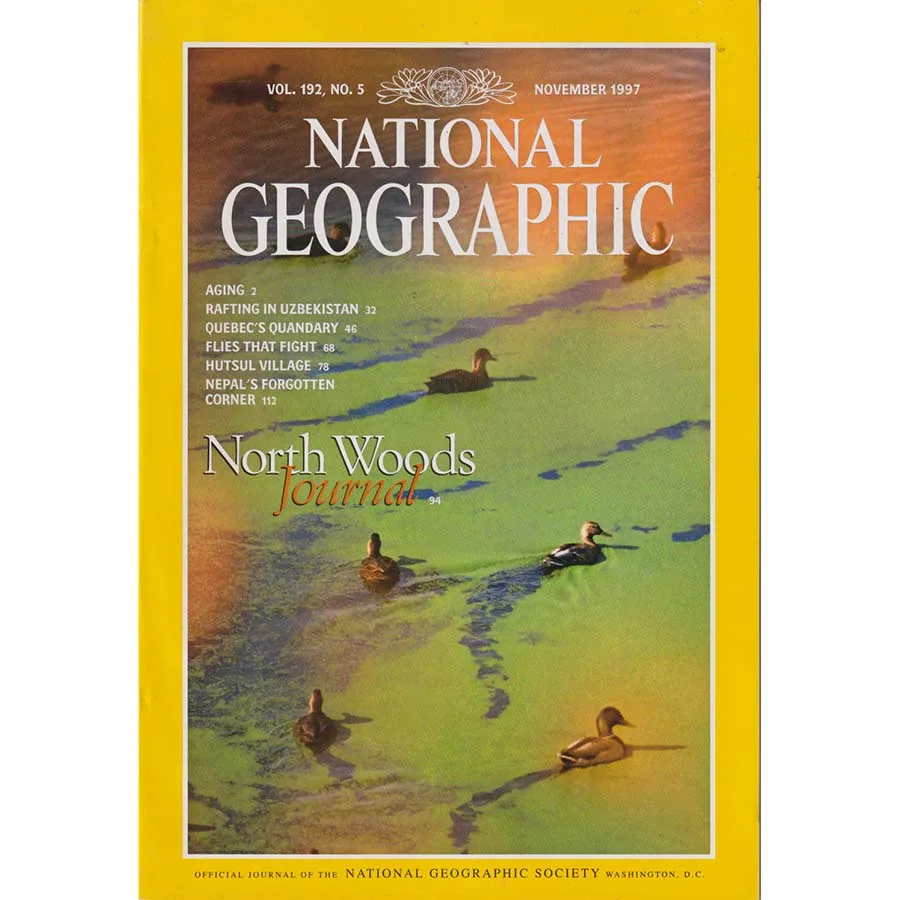
Publisher: National Geographic
Format: Paperback
ISBN: none
Welcome to National Geographic, November 1997 (Vol. 192, No. 5) — a soothing, late-90s antidote to modern life, back when the world’s problems were still printed on paper and you could escape into a magazine that smelled faintly of knowledge and optimism.
The cover is quietly gorgeous: a painterly sweep of green water with a handful of ducks drifting like they’ve got nowhere urgent to be. The headline, North Woods Journal, sounds like the kind of thing you’d buy in a cabin gift shop, right before brewing coffee and becoming emotionally attached to a flannel shirt. It’s calm. It’s reflective. It’s the National Geographic version of “take a deep breath,” except you’ll probably end up learning three new facts about ecology and at least one unsettling thing about insects.
Because inside, this issue is classic Nat Geo variety — the gentle wilderness vibe is just the front door. Once you step in, the magazine starts doing that thing where it hands you the whole planet and expects you to keep up.
North Woods Journal is your main feature: a seasonal, atmospheric wander through forest country — lakes, bogs, loons, the smell of pine, and that slow, almost ceremonial rhythm of a place that doesn’t care about your emails. It’s part nature writing, part field notes, part love letter to “up north” landscapes, delivered in that warm Nat Geo tone that makes you feel like a better person simply for reading it. You’ll finish it wanting to own binoculars and a sensible hat.
But then, in true National Geographic fashion, the contents list gently ambushes you with everything else:
-
Aging — because while you’re busy looking at ducks, the magazine slides in a thoughtful meditation on time, bodies, and the fact that your knees have opinions now. It’s earnest, human, and unavoidably relatable.
-
Rafting in Uzbekistan — which is a sentence that sounds like a dare. Adventure, geography, post-Soviet curiosity, and the comforting reminder that someone, somewhere, is voluntarily wet and uncomfortable so you can read about it in comfort.
-
Quebec’s Quandary — language, identity, politics, and the fine art of living inside a complicated question. Nat Geo does this sort of thing well: big issues made readable without pretending they’re simple.
-
Flies That Fight — the exact moment your cosy forest mood is replaced by the knowledge that nature is also full of tiny combatants with extremely determined life strategies. Fascinating. Horrifying. You will scratch your arm for no reason.
-
Hutsul Village — a cultural deep dive into mountain life, tradition, and the kind of human texture that makes you realise “Europe” is not one thing, but a thousand distinct worlds.
-
Nepal’s Forgotten Corner — remote landscapes, overlooked communities, and that Nat Geo speciality: going somewhere you didn’t know existed and making it feel essential.
Condition: Good, meaning it’s pre-loved but very much alive — sturdy, readable, and still capable of turning a casual “quick flick” into a full evening of armchair travel and unexpected insect anxiety. It’ll look great on a table, it’ll read even better in a chair, and it has the added bonus of making you feel mildly virtuous for choosing print over doomscrolling.
If you want a November issue that starts with peaceful ducks and ends with you contemplating aging, identity, remote Nepal, and militant flies — November 1997 is your yellow-bordered, late-90s wonder-sampler. Sold by Crappy Old Books, naturally: purveyors of second-hand serenity, with occasional entomological ambushes.
Keep browsing: See more National Geographic books Other books by National Geographic
